
Shaved effect
Recreates the appearance of shaved hair with density calibrated to the degree of hair loss.
A scalp treatment that creates the visual impression of hair in thinning or hairless areas.
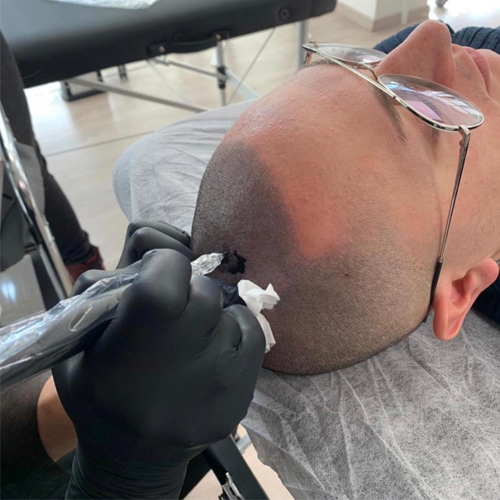
Scalp micropigmentation places fine pigment impressions in the scalp at carefully controlled densities. Together they create the visual appearance of natural hair.
It can recreate a shaved look, reduce scalp show-through beneath longer hair or visually soften scars. Every treatment plan is defined individually.
Recreates the appearance of shaved hair with density calibrated to the degree of hair loss.
Visually reduces scalp show-through and increases the impression of fuller hair.
Makes scars from transplants, injuries or trauma less noticeable.
A short video of Elisabetta Belfiore treating Annalisa, from an overview of the session to close-up details of the work on the scalp.
The initial treatment generally involves three sessions. Because the treatment is reversible, annual or six-monthly maintenance may later be recommended depending on skin and metabolism.
Treatment planning and the first pigment application to the scalp.
Performed a few days later to refine density and uniformity.
The third session assesses settling and completes the initial process.
Scalp micropigmentation may be considered for different patterns of thinning hair, hair loss or scarring.
The handpiece is balanced for accurate work; needles are sterile and single-use, and pigments meet applicable requirements.
A session lasts about two hours. Alopecia areata or totalis cases may require three to four hours.
12 short videos to help you understand the treatment, explore your options and prepare for your session. Choose a question to open the answer.
Choose your audio and subtitlesPrefer to read? Go to the written FAQs ↓ Is scalp micropigmentation noticeable up close?Watch the answer · 2:12
The video could not be loaded. Select the language again to retry.
 Shaved look or density effect: do I need to shave my hair?Watch the answer · 1:32
The video could not be loaded. Select the language again to retry.
 Thinning hair in women: what results are possible?Watch the answer · 1:11
The video could not be loaded. Select the language again to retry.
 Will others notice? Should I tell them?Watch the answer · 1:09
The video could not be loaded. Select the language again to retry.
 What should I do in the first few days after treatment?Watch the answer · 2:04
The video could not be loaded. Select the language again to retry.
 What does it look like after 1, 5 or 10 years?Watch the answer · 1:52
The video could not be loaded. Select the language again to retry.
 How often should I shave to maintain the shaved look?Watch the answer · 1:20
The video could not be loaded. Select the language again to retry.
 Can scalp micropigmentation and medical treatment be combined?Watch the answer · 1:17
The video could not be loaded. Select the language again to retry.
 When is it better not to proceed with treatment?Watch the answer · 1:14
The video could not be loaded. Select the language again to retry.
 Hair transplant and scalp micropigmentation: alternatives or complementary?Watch the answer · 1:54
The video could not be loaded. Select the language again to retry.
 Hair fibres or scalp micropigmentation: when is camouflage no longer enough?Watch the answer · 1:45
The video could not be loaded. Select the language again to retry.
 FUE or FUT scars: what is possible and what are the limits?Watch the answer · 1:44
The video could not be loaded. Select the language again to retry.
Before treatment, the scalp, hair loss and individual needs are assessed to define a coherent plan and harmonious effect.
View all FAQsTo create a natural shaved effect, improve the appearance of density or camouflage scars.
Different forms of alopecia, insufficient hair-transplant coverage and scars may be assessed.
Usually three: two a few days apart and a review after one month.
It is virtually painless for most people; sensitive clients may feel manageable discomfort.
Sterile single-use needles and compliant biocompatible pigments are used.
Tell us what you need. We will contact you through your preferred channel and time window.
✓ Personal assessment · Direct contact · No obligationWe have received your request and will contact you using your preferred method.